About the Project
Kotzebue is a majority-Indigenous community in Northwestern Alaska, located just north of the Arctic circle on the Baldwin Peninsula on the northeastern shore of Kotzebue Sound, where the local population relies heavily on aquatic resources for their annual subsistence harvest (Whiting et al. 2011). Over the last forty years, the land and waters of the Arctic have noticeably warmed. For Indigenous communities like that of Kotzebue, the rising temperatures have already impacted subsistence food systems and continue to threaten food sovereignty in the region.
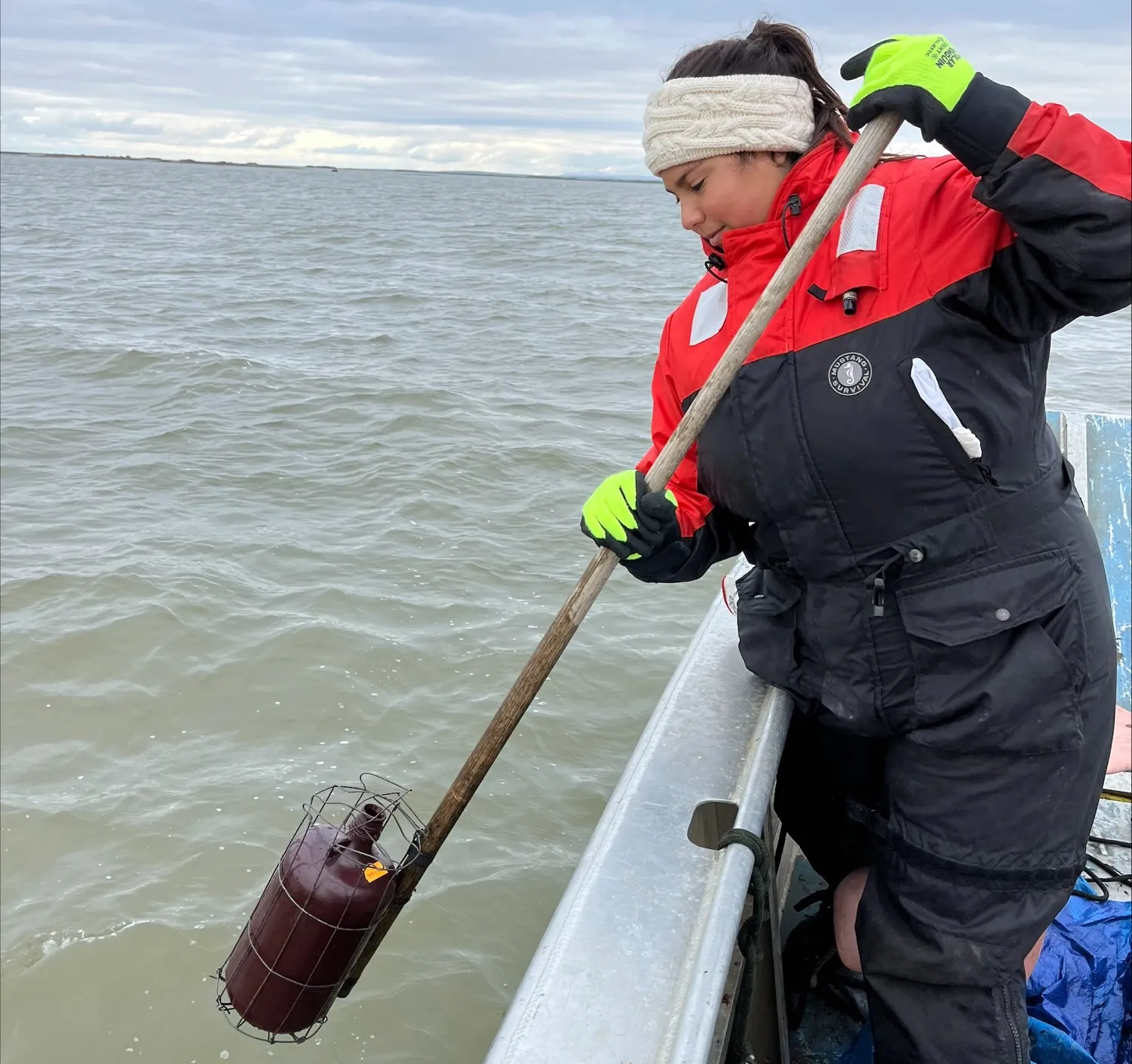
Over 15 years ago, Alex Whiting, Kotzebue’s Environmental Program Director, noticed new and unusual algal growths in the waters of Kotzebue. In the time since, these growths have been identified as cyanobacteria (blue-green algae) blooms, a type of Harmful Algal Bloom (HAB). HABs are incidents of rapid algal growth that negatively impact other organisms or the ecosystem generally, usually through toxins produced by the algae. These toxins can bioaccumulate in marine ecosystems, resulting in fish die-offs and human health impacts in both the short and long-term (Lefebvre et al. 2016; Dorantes-Aranda et al. 2015; Berdalet et al. 2015).
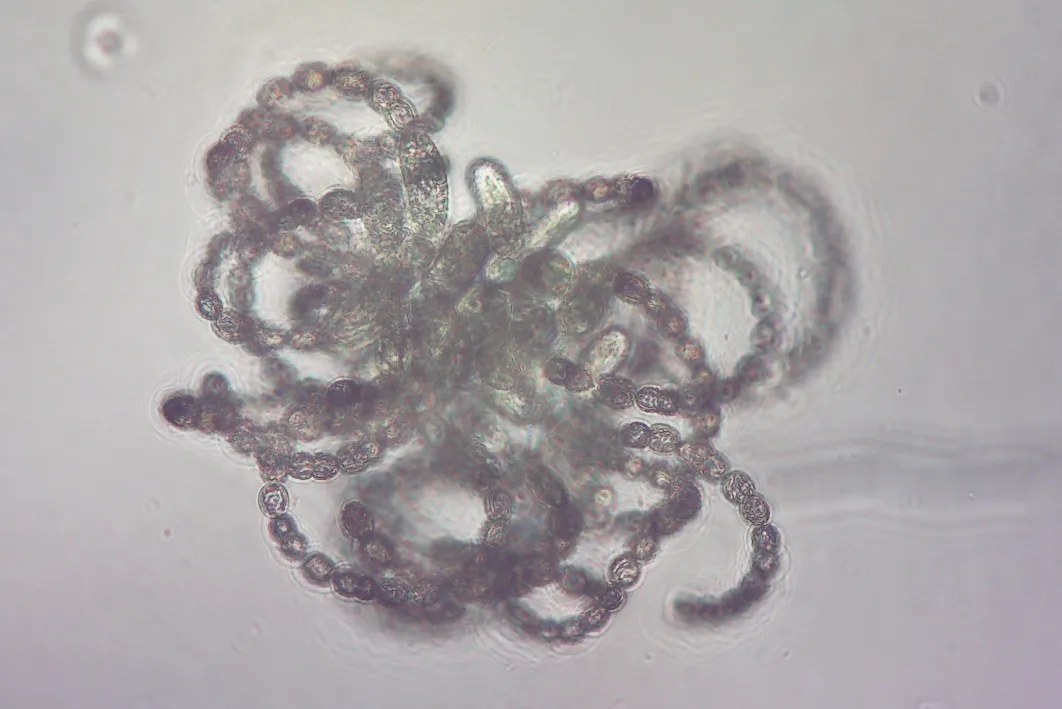
Recent work has shown an increase in the incidents of HABs of many species in the Arctic due to warming waters and changes to ocean circulation (Anderson et al. 2018). Beyond bloom-forming species, phytoplankton communities can also help us understand how warming is impacting the Arctic with respect to factors like nutrient runoff or water temperature. Phytoplankton are small, photosynthesizing organisms that form the base of aquatic food webs and they are particularly responsive to changes in nutrient concentration, light availability, and temperature (NOAA “Phytoplankton”). Therefore, studying phytoplankton communities, including potential HABs, is of particular interest to Arctic communities and researchers alike.
Project Members

Principal Researcher

Graduate Student Researcher

Undergraduate Student Research Intern

Undergraduate Student Research Intern

Undergraduate Student Research Intern